The Art of Gardening: Applying the Strategies of Sun Tzu
Introduction
Sun Tzu’s The Art of War, written in ancient China, explores strategy, preparation, observation and the efficient use of resources. Although intended for military leadership, several of its principles can be applied to horticulture. A garden is a dynamic environment in which plants compete for light, water and nutrients, while gardeners manage pests, diseases, weeds and changing weather.
Applying strategic thinking to gardening means understanding the site, anticipating problems and working with natural processes rather than relying solely on reactive intervention.

Know Your Ground
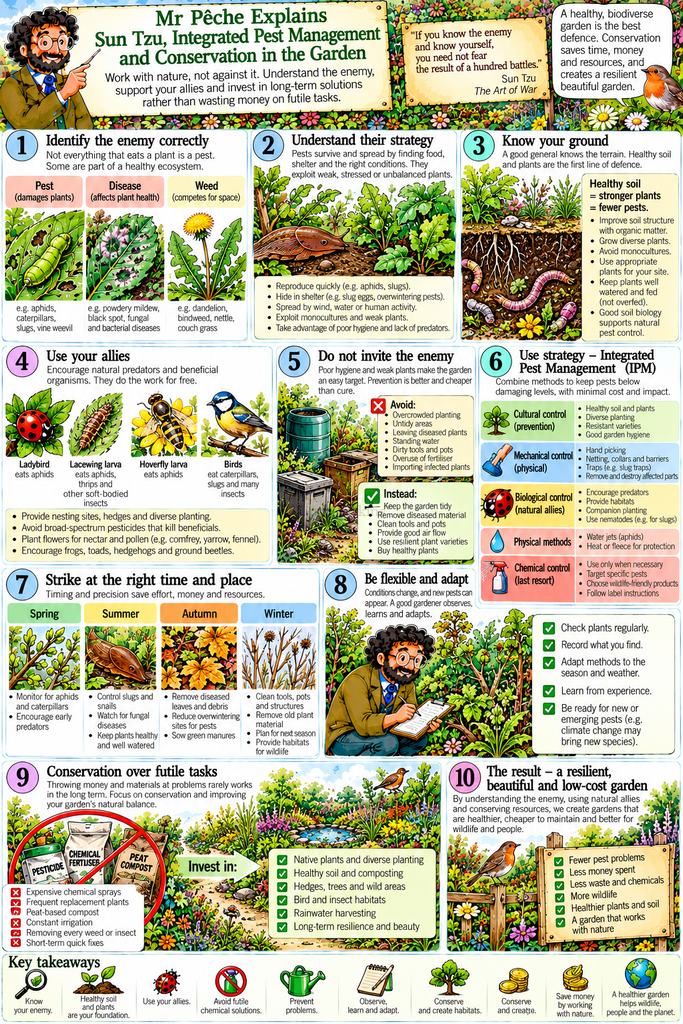
Sun Tzu emphasised the importance of understanding the terrain before taking action. In gardening, this means assessing soil type, pH, drainage, aspect, prevailing winds and available light before selecting plants.
A plant suited to a sheltered, acidic woodland garden may fail in an exposed, alkaline border. Careful site assessment reduces unnecessary expenditure, wasted effort and plant losses.
Gardening principle: Understand the conditions before deciding what to plant.
Know Your Allies
Successful gardeners recognise that many organisms provide valuable support. Pollinating insects, predatory beetles, hoverfly larvae, birds, earthworms and soil microorganisms all contribute to garden health.
Ladybirds and their larvae feed on aphids, while birds consume many insects and other invertebrates. Earthworms improve soil structure, and mycorrhizal fungi form associations with plant roots that can assist nutrient uptake.
These allies need suitable habitats. Flowering plants, mixed hedges, leaf litter, ponds and undisturbed areas can support beneficial wildlife.
Gardening principle: Encourage natural allies by providing food, shelter and suitable habitat.
Do Not Invite the Enemy In
Preventing problems is often more effective than trying to control them after they become established. Gardeners can reduce opportunities for pests, diseases and weeds through good design and maintenance.
Examples include:
- Selecting disease-resistant cultivars suited to local conditions.
- Inspecting new plants before introducing them to the garden.
- Cleaning tools where disease transmission is a concern.
- Removing diseased material appropriately.
- Avoiding excessive watering and overcrowding, which can encourage certain diseases.
- Preventing weeds from setting seed and spreading.
- Using healthy soil and appropriate planting distances to reduce plant stress.
However, not every insect or weed is an enemy. Many provide food for wildlife or contribute to biodiversity. Identification is essential before action is taken.
Gardening principle: Prevent avoidable problems, but distinguish genuine threats from useful organisms.

Strategy and Tactics
Strategy establishes the long-term objective; tactics are the individual actions used to achieve it.
A strategy might be to create a resilient, low-maintenance wildlife garden. Tactics could include planting a native hedge, reducing lawn area, establishing a wildflower patch and collecting rainwater.
Integrated Pest Management (IPM) follows a similar approach. It involves monitoring plant health, identifying pests accurately, assessing whether intervention is necessary and choosing the least harmful effective control method.
A gardener should not automatically reach for a pesticide at the first sign of damage. The presence of a pest does not always mean that a plant will suffer significant harm.
Gardening principle: Establish the objective first, then select proportionate actions that support it.
Choose the Right Time
Timing can determine the success of a gardening task. Pruning at the wrong time may remove flowers, expose plants to damage or disturb nesting birds. Working wet clay can cause compaction, while planting during extreme heat increases establishment stress.
Observation and planning help gardeners act when conditions are favourable. Seasonal maintenance schedules, weather forecasts and regular inspections allow potential problems to be anticipated.
Gardening principle: Act when conditions are suitable, not simply when a task appears on the list.
Conserve Resources and Avoid Unnecessary Conflict
Sun Tzu’s emphasis on efficiency is relevant to sustainable horticulture. Water, nutrients, labour and money are limited resources. Using them carefully produces better long-term results.
Mulching can conserve soil moisture, composting can recycle suitable organic matter, and choosing plants adapted to the site can reduce irrigation and maintenance. Allowing natural predators to regulate some pests may also reduce the need for chemical controls.
A garden should not become a constant battle against nature. The aim is to establish a balanced system in which plants, wildlife and people can coexist.
Conclusion
The strategic ideas associated with Sun Tzu provide a useful framework for horticulture: understand the ground, recognise allies, prevent avoidable problems, plan ahead and use resources efficiently. Applied thoughtfully, these principles encourage gardeners to observe before acting and to build resilient gardens rather than continually fighting recurring problems.
Key learning points
- Assess the site before choosing plants or methods.
- Encourage beneficial wildlife and soil organisms.
- Prevent pest and disease problems through good horticultural practice.
- Distinguish long-term strategy from individual gardening tactics.
- Time tasks according to plant biology, weather and wildlife needs.
- Use Integrated Pest Management to make proportionate, evidence-based decisions.
References
Royal Horticultural Society (n.d.) Integrated pest management. Available at: https://www.rhs.org.uk/
Sun Tzu (2005) The Art of War. Translated by T. Cleary. Boston: Shambhala Publications.
Accessed: 18 October 2026.