Cultivation
The Reasons for Primary Cultivation
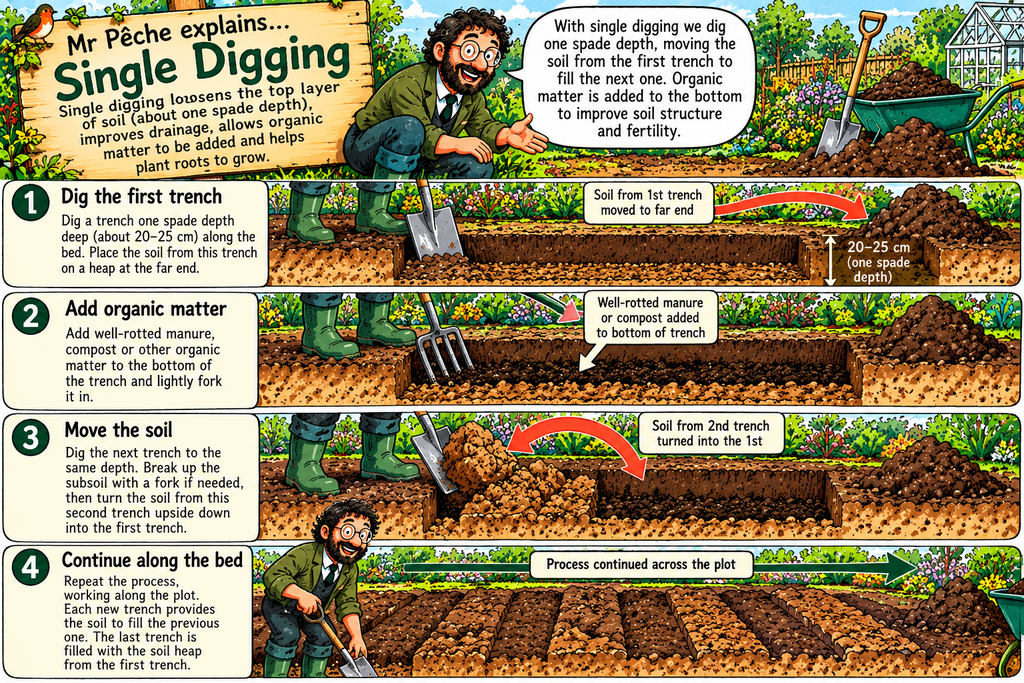
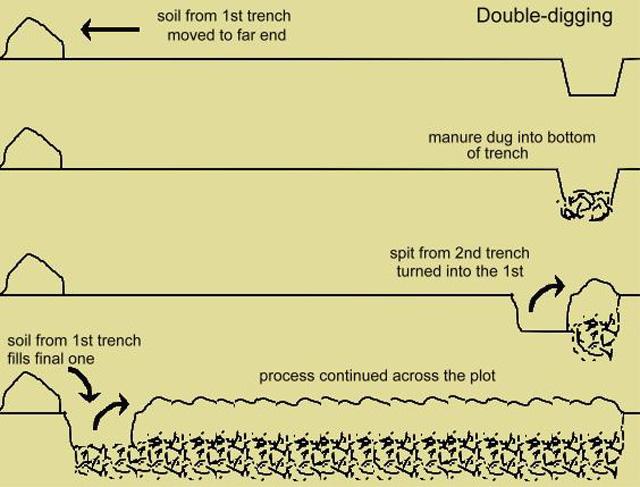
Primary cultivation is traditionally the first serious intervention a gardener makes in the soil. Its purpose is to open, loosen and restructure ground that may have become compacted, neglected or difficult to plant. Digging, forking or mechanical cultivation can break up compacted layers, improve drainage and aeration, incorporate organic matter and remove persistent perennial weeds and their roots.
The underlying principle is simple: roots need somewhere to go. A healthy soil contains a balance of solid particles, water and air. Cultivation can increase the pore spaces available for roots and soil organisms, allowing oxygen, water and roots to move through the soil more easily. It can also expose buried weeds to the surface, where they can be removed or allowed to dry out.
However, the traditional approach is not the only way of achieving these results.
The no-dig approach questions whether physically turning the soil is necessary at all. Instead, organic matter such as compost is applied to the surface and incorporated gradually by earthworms, microorganisms, plant roots and natural weathering. Advocates argue that this protects soil structure, reduces disturbance to soil organisms and can reduce the amount of weed seed brought to the surface. It is particularly attractive where soil is already in reasonable condition.
The Reasons for Secondary Cultivation

Secondary cultivation is the stage where the gardener begins to turn a roughly prepared piece of ground into a suitable seedbed or planting area. Primary cultivation breaks up compacted soil, incorporates organic matter and opens the soil profile. Secondary cultivation is more about refinement: creating the conditions in which roots, seeds and soil organisms can work together effectively.
The first objective is to produce a fine, even tilth. Seeds need close contact with moist soil if they are to germinate successfully. Large clods leave air gaps around the seed, while soil that has been worked into a powder can become compacted and form a surface crust. The gardener is therefore looking for a balance—a crumbly structure with enough fine particles to retain moisture, but sufficient pore spaces for air and drainage.
Secondary cultivation also helps to level and consolidate the soil surface. This is particularly important when preparing areas for direct sowing or planting. A level surface makes it easier to sow seeds at a consistent depth and reduces the risk of water collecting in hollows.
Another important purpose is weed control. Cultivation can disturb young annual weeds before they become established. The timing is important: cultivating when weeds are small can dramatically reduce competition for light, water and nutrients without relying entirely on chemical control.
The process can also help to incorporate amendments and organic matter into the upper soil layer. However, cultivation should not become an exercise in endlessly turning the soil. Soil is a living system, containing roots, fungi, bacteria, earthworms and countless other organisms. Excessive cultivation can damage soil structure and disturb these communities.
Good secondary cultivation is therefore a matter of judgement. The aim is not simply to make the soil look tidy, but to create the physical conditions that allow plants to establish quickly and roots to explore the soil freely. The best gardener knows when to stop: once the soil is ready, further cultivation may do more harm than good.
Hugelkultur takes another approach, building raised growing areas around woody material, organic matter and soil. As the buried wood decomposes, it gradually contributes organic material and creates a structure capable of holding water. It can be particularly useful where gardeners are trying to make productive use of difficult ground or create raised beds from locally available materials. However, it is not a universal solution and requires careful construction and an understanding of how woody material decomposes.
The important point is that primary cultivation should not become a ritual. Digging is a tool, not a religion. On badly compacted or neglected ground, it may be exactly what is required. On healthy, well-structured soil, disturbing the soil may achieve very little.
A good gardener therefore looks at the ground first and chooses the least destructive method that will produce the conditions the plants require.
Wearing the Correct PPE and Working Safely

Health and safety in horticulture is sometimes treated as something that gets in the way of practical work. In reality, good health and safety should make practical work possible. The aim is not to eliminate every risk—gardening would become rather difficult if we tried—but to identify hazards, assess the risks and put sensible controls in place.
The Health and Safety at Work etc. Act 1974 provides the foundation. Employers have a duty, so far as is reasonably practicable, to protect the health, safety and welfare of people at work. Employees also have responsibilities, including taking reasonable care of themselves and others and following appropriate systems of work.
PPE is therefore not simply a matter of putting on whatever happens to be hanging in the shed. The Personal Protective Equipment at Work Regulations 1992, as amended by the Personal Protective Equipment at Work (Amendment) Regulations 2022, require suitable PPE where risks cannot be adequately controlled by other means. Employers must provide appropriate PPE, information, instruction and training, while workers must use it correctly.
In horticulture this might mean safety boots when using machinery or handling heavy materials, gloves when handling thorny plants or certain substances, eye protection when there is a risk of flying particles, and hearing protection when using noisy machinery. Respiratory protective equipment may also be necessary where dust, fumes or other airborne hazards cannot be adequately controlled.
There is an important distinction here: PPE is generally the last line of defence, not the first. A risk should first be eliminated where possible, or controlled through safer equipment, methods of working, isolation, ventilation and training. PPE then provides additional protection where a significant residual risk remains.
For chemicals, fertilisers and other hazardous substances, the Control of Substances Hazardous to Health Regulations 2002 (COSHH) require employers to assess and control exposure. Gloves or eye protection may be necessary, but safe storage, handling, ventilation and working procedures are equally important.
Ultimately, wearing PPE is not about following rules for their own sake. It is about developing the professional habit of looking at a job before starting it, understanding what could go wrong and taking sensible steps to prevent it. The best safety equipment is a thoughtful gardener who understands the risk before picking up the tool.