Horticulture & Hard Landscaping

Hard landscaping is the construction and installation of permanent or semi-permanent features within a garden or landscape. It provides structure, access, stability and practical function, complementing the living elements of soft landscaping, such as trees, shrubs, lawns and herbaceous plants.
At Level 2 and above, practical horticulture students develop the skills needed to measure, set out, prepare ground, select materials and construct basic landscape features safely and accurately.
Hard landscaping combines practical construction skills with horticultural knowledge. A successful installation must be functional, durable, safe and appropriate for its intended use.
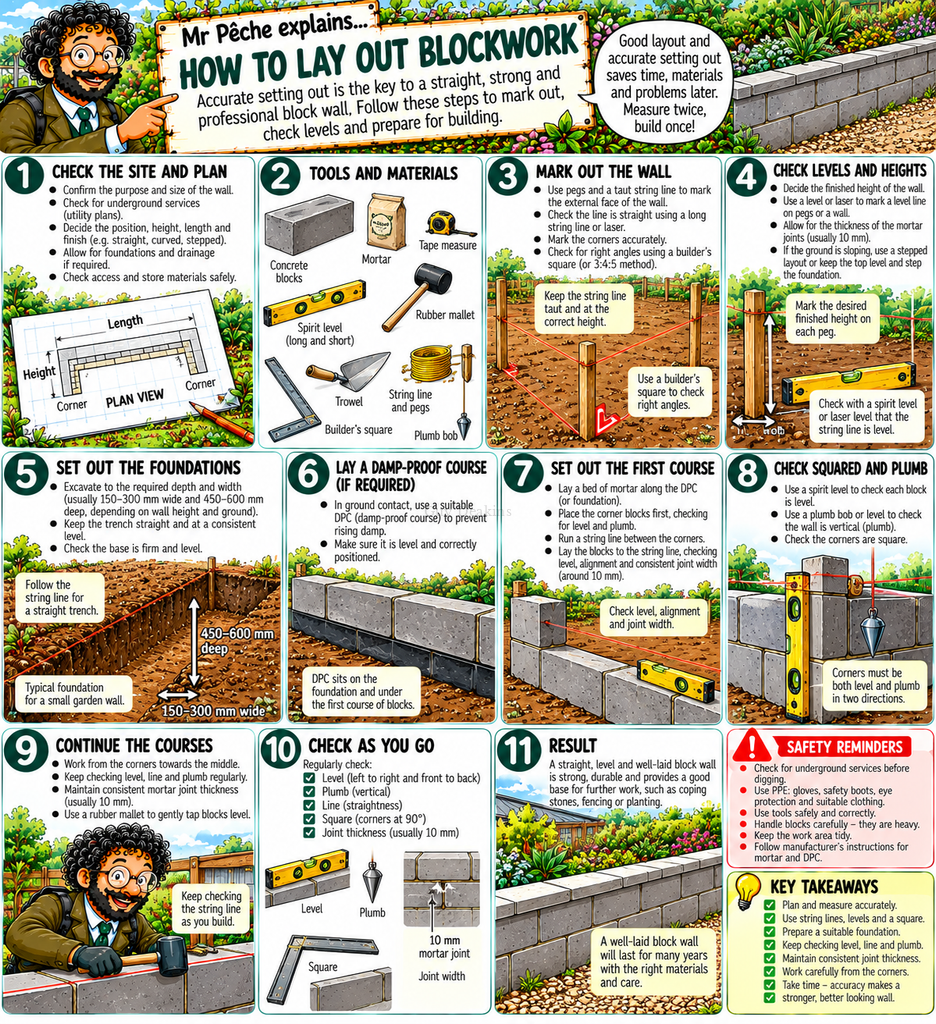
1. Preparing and Setting Out a Site

Before construction begins, the site must be assessed and prepared. This involves identifying the proposed layout, measuring dimensions, checking levels and locating existing services or potential hazards.
Typical preparation tasks include:
- interpreting a simple plan or design brief;
- measuring and marking out dimensions;
- establishing straight lines, right angles and finished levels;
- removing vegetation or unsuitable material where required;
- excavating to the correct depth;
- preparing a suitable sub-base; and
- ensuring appropriate drainage.
Accurate setting out is essential. Errors at this stage can affect the alignment, stability and appearance of the finished work.
2. Fencing and Timber Structures
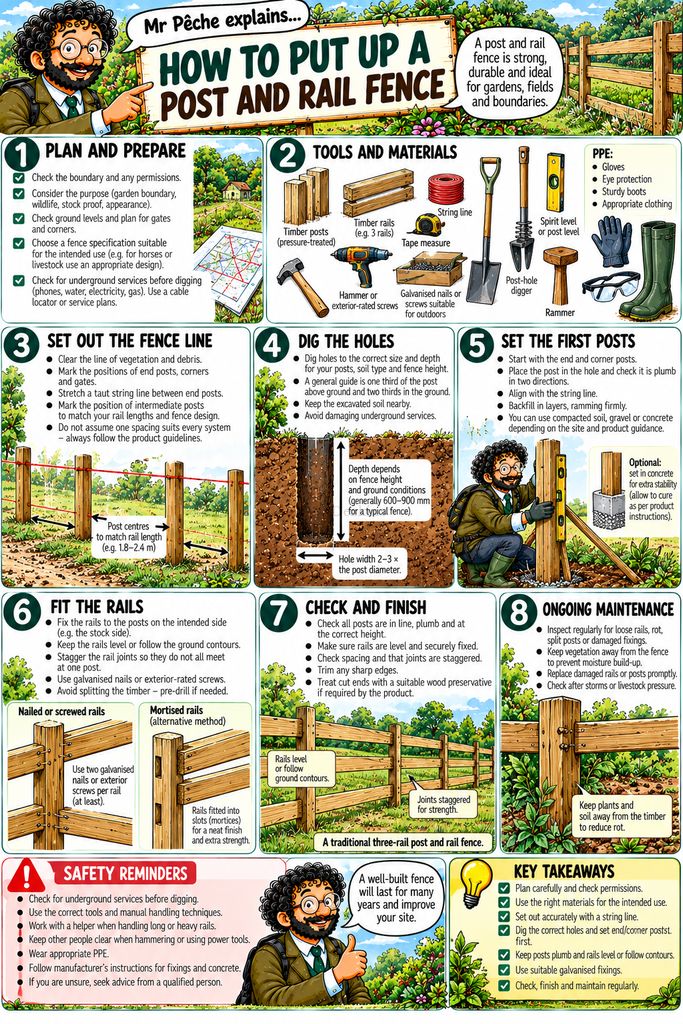
Fencing provides boundaries, privacy, security and support for climbing plants. Common construction types include post-and-rail fencing, close-board fencing and other panel systems.
Students need to understand how to:
- measure and mark post positions;
- excavate post holes;
- install and align posts securely;
- attach rails, panels or boards;
- check levels, spacing and alignment; and
- select suitable materials and fixings.
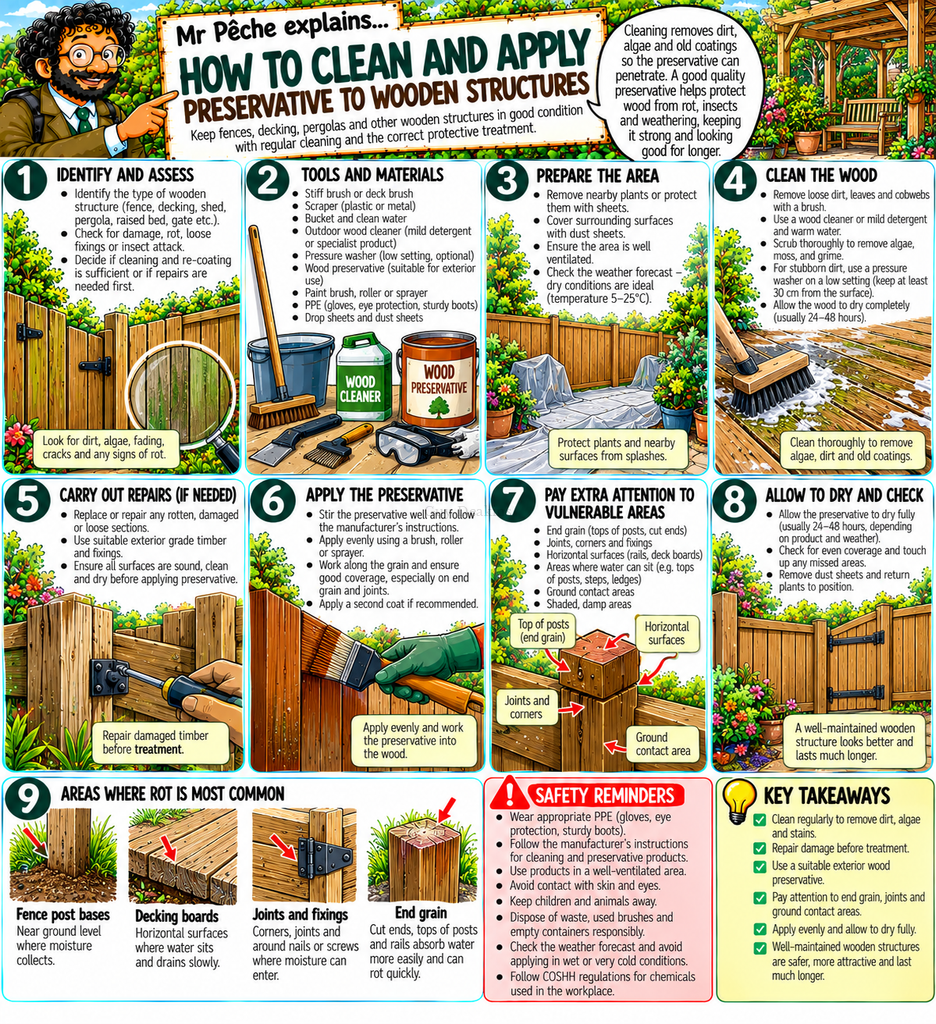
Timber in contact with the ground requires appropriate durability for its intended use. Construction must also account for wind loading, ground conditions and the purpose of the fence.

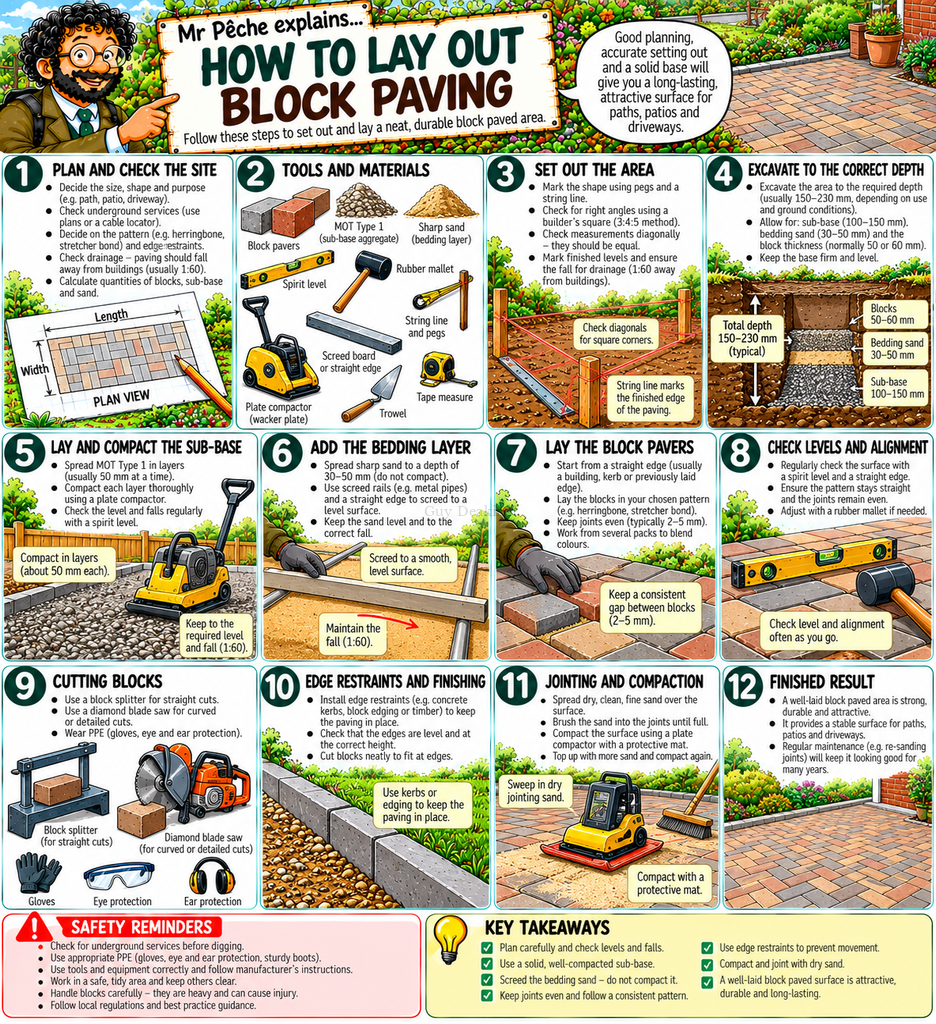
3. Paving and Paths
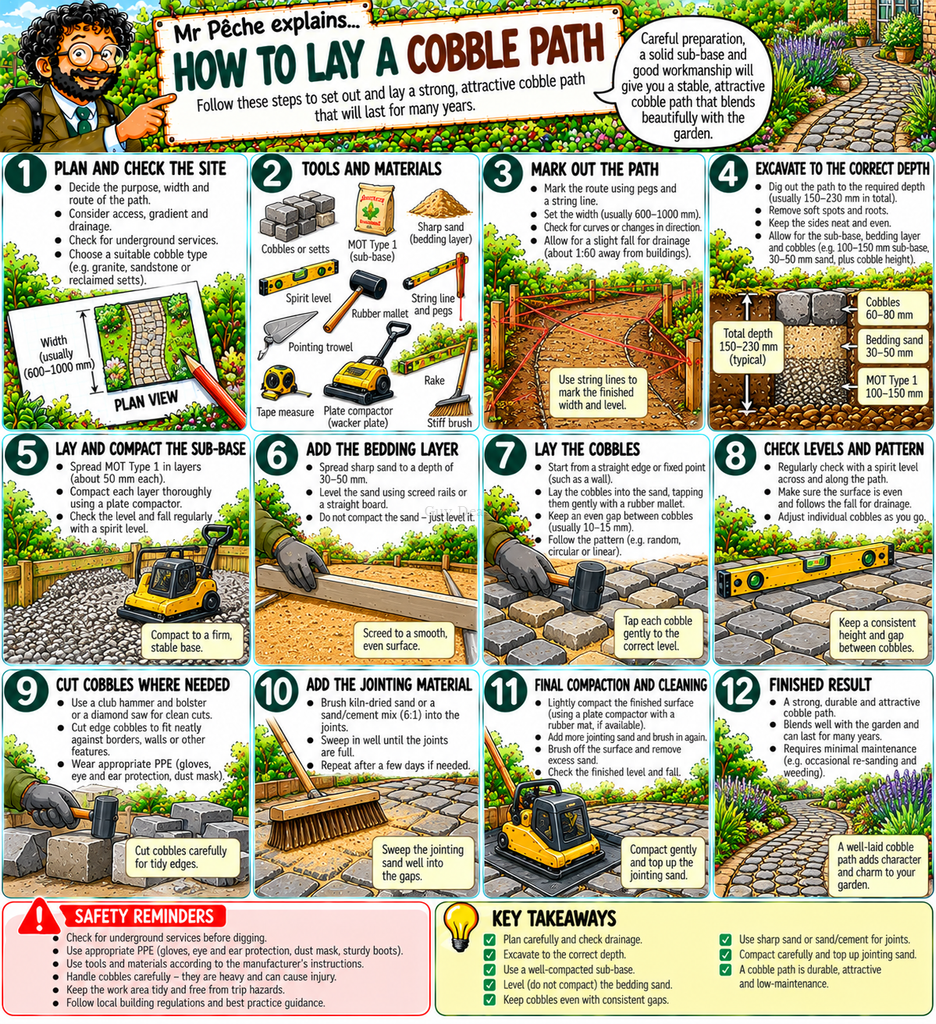
Paving creates stable surfaces for walking, seating and access. Materials may include concrete slabs, natural stone, block paving and cobbles.
A typical installation involves:
- Setting out the area and finished levels.
- Excavating to the required depth.
- Preparing and compacting a suitable sub-base.
- Installing the appropriate bedding layer.
- Laying the paving in the chosen pattern.
- Maintaining consistent joints and levels.
- Completing the joints and checking the finished surface.
Drainage is particularly important. Surfaces should not direct water towards buildings or create unsafe areas of standing water. The construction method must suit the paving material, expected loading and ground conditions.


4. Brickwork and Garden Features

Brickwork can be used to construct garden walls, raised beds, steps, pillars and other landscape features.
Students should develop an understanding of:
- setting out foundations and wall positions;
- preparing a suitable base;
- mixing mortar correctly;
- laying bricks to a consistent line and level;
- maintaining appropriate joints;
- bonding bricks correctly;
- constructing simple corners and pillars; and
- leaving the finished work safe and tidy.
Brickwork requires accuracy and an understanding of how the construction will be used. Retaining walls, for example, must be designed to resist the pressure of the soil behind them. More complex structural work may require specialist knowledge and professional guidance.

5. Health and Safety
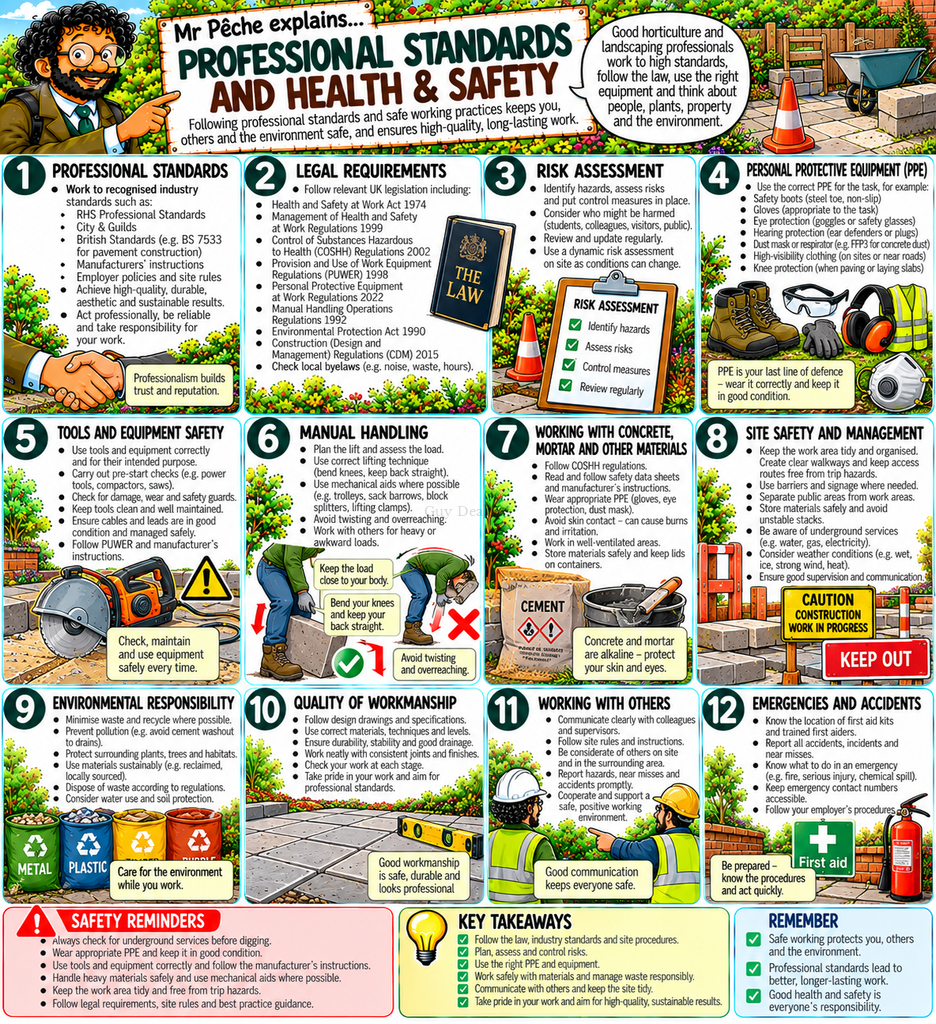
Hard landscaping involves heavy materials, excavation, hand tools, machinery and potentially hazardous substances. Health and safety must be considered throughout the work.
Essential precautions include:
- wearing appropriate personal protective equipment (PPE);
- inspecting tools and equipment before use;
- following risk assessments and safe working procedures;
- using correct lifting and handling techniques;
- controlling dust when cutting masonry or paving;
- handling cement and mortar safely;
- maintaining a clear working area; and
- disposing of waste responsibly.
The finished site should be stable, safe and suitable for its intended use.
6. Quality and Professional Standards
Successful hard landscaping depends on more than completing the construction. Students should be able to assess the quality of their work.
The finished installation should be checked for:
- correct dimensions;
- alignment and levels;
- stability;
- suitable drainage;
- consistent joints;
- appropriate materials;
- a clean and tidy finish.
Poor preparation can lead to uneven paving, unstable fencing, settlement and drainage problems. Correct setting out and ground preparation help prevent these defects.
Conclusion
Level 2 hard landscaping develops practical skills that are essential to professional gardening and landscape maintenance. Fencing, paving, paths and brickwork provide the structure and function of outdoor spaces, while plants provide their living character.
A competent horticulturist must understand how these elements work together to produce landscapes that are safe, durable, attractive and fit for purpose.
Further reading and qualification reference
City & Guilds offers the Level 2 Award, Certificate and Diploma in Practical Horticulture Skills (7573-02), which includes practical horticultural skills and landscaping options. The official qualification handbook should be used to confirm the exact unit titles and assessment requirements for the course being studied.
– City & Guilds — Practical Horticulture Skills