Creating Bird-Friendly Gardens: Understanding Different Species

Bird-friendly gardens provide food, water, shelter, nesting opportunities and safe spaces throughout the year. Different bird species have different requirements, so a successful garden combines varied planting, suitable feeding areas and habitats that support the wider food chain.
Garden design can contribute to bird conservation by connecting green spaces and providing resources in urban and rural environments.
Food for Different Bird Species
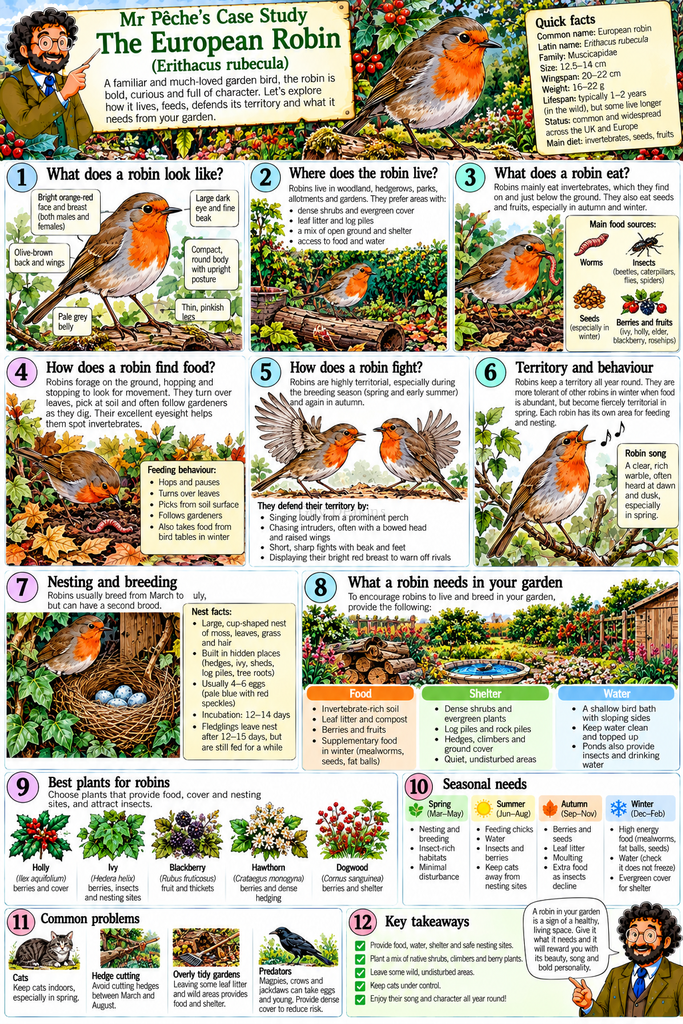
Birds have different feeding adaptations, reflected in their beaks, behaviour and preferred habitats.
- Robins (Erithacus rubecula): Feed on insects, worms and other small invertebrates. Open soil, leaf litter and undisturbed corners provide valuable foraging areas.
- Blue tits (Cyanistes caeruleus): Eat caterpillars, spiders and other invertebrates, particularly when feeding chicks. Mature trees and insect-rich shrubs provide natural food.
- House sparrows (Passer domesticus): Adults eat seeds and plant material, while chicks depend heavily on invertebrates. Dense shrubs, hedges and suitable nest sites are important.
- Goldfinches (Carduelis carduelis): Specialise in small seeds, including those from teasels and thistles. Leaving selected seed heads standing can provide winter food.
- Blackbirds (Turdus merula): Feed on earthworms, insects and fruit. Leaf litter, moist soil and fruit-bearing shrubs are particularly useful.
- Starlings (Sturnus vulgaris): Search lawns and short vegetation for soil invertebrates, including leatherjackets and other insect larvae. Open foraging areas can be valuable where soil conditions support them.
- Great spotted woodpeckers (Dendrocopos major): Feed on insects and other food found in trees, and may use mature trees and deadwood for foraging and nesting.
These examples demonstrate why a garden containing only bird feeders may support fewer species than one offering a range of natural habitats.
Nesting and Shelter

Different birds require different nesting sites. Robins often nest in sheltered cavities or dense vegetation close to the ground, while blue tits and great tits use holes in trees or nest boxes. House sparrows commonly nest in building cavities and may use specially designed sparrow terraces. Blackbirds often nest in dense shrubs or hedges.
Planting mixed native hedges, retaining mature trees and allowing some areas to grow naturally can provide nesting material and cover. Nest boxes should be appropriate for the intended species, securely fixed and positioned away from excessive heat, prevailing weather and easy access by predators.
Hedges should be checked carefully before cutting. In the UK, active wild bird nests are legally protected, so hedge cutting should be avoided where nests are active.
Water and Hygiene

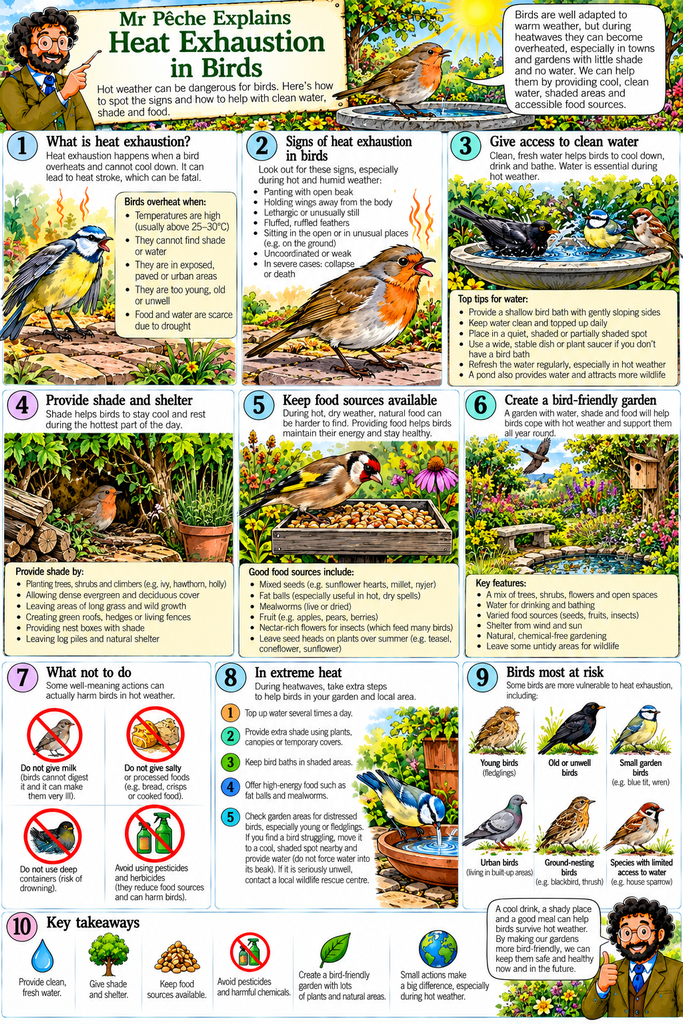
Birds need clean water for drinking and bathing. A shallow bird bath with gently sloping sides and a rough surface provides a safer foothold than a deep, slippery container. Place it near cover but not so close that predators can easily ambush birds.
Refresh the water regularly and clean feeders and baths to reduce the spread of disease. Remove uneaten food, especially during warm or wet weather, and avoid feeding mouldy or spoiled food.
Planting for Birds Throughout the Year
A bird-friendly garden should offer resources in every season.
- Spring: Insects and caterpillars support breeding birds and growing chicks.
- Summer: Shrubs, trees and flowering plants provide cover and invertebrate food.
- Autumn: Berries and seeds help birds build energy reserves.
- Winter: Seed heads, fruit, evergreen cover and supplementary feeding can help birds survive periods of food shortage.
Plants such as hawthorn (Crataegus monogyna), holly (Ilex aquifolium), ivy (Hedera helix) and rowan (Sorbus aucuparia) can provide combinations of shelter, fruit, flowers and associated invertebrates. Plant selection should suit the garden’s soil, climate and available space.
Reducing Hazards
Windows can cause fatal collisions, particularly when they reflect vegetation or sky. External window markers or carefully positioned planting can help reduce risk. Cats can also pose a significant threat to garden birds, particularly fledglings; dense cover and responsible pet management can improve safety.
Avoid pesticides wherever possible, as they reduce the invertebrates many birds need. Keep garden chemicals away from ponds, feeders and drinking water.

Conclusion
Bird-friendly gardening is about creating a functioning habitat rather than simply attracting birds to a feeder. By providing varied food sources, appropriate nesting sites, clean water, dense cover and safe foraging areas, gardeners can support a wider range of species throughout the year.
Key learning points
- Different bird species have different feeding and nesting requirements.
- Invertebrates are essential food for many breeding birds.
- Native trees, hedges, fruiting shrubs and seed-bearing plants provide natural resources.
- Clean water and good feeder hygiene help reduce disease.
- Reducing pesticides, window collisions and disturbance improves garden safety.
References
British Trust for Ornithology (n.d.) Garden birds. Available at: https://www.bto.org/
Royal Society for the Protection of Birds (RSPB) (n.d.) How to make your garden bird-friendly. Available at: https://www.rspb.org.uk/
Wildlife and Countryside Act 1981, c.69. Available at: https://www.legislation.gov.uk/ukpga/1981/69/contents
Accessed: 18 October 2026.