Gardening: Gardening with a Hot, Dry Climate
1. Introduction

Western Australia offers a valuable example of how gardeners must adapt their practices to local climate, soil and water availability. Much of the south-west experiences hot, dry summers and cooler, wetter winters, while inland areas can be extremely arid. Northern regions are generally hotter, with tropical conditions and seasonal rainfall.
Successful gardening in Western Australia is not simply about choosing plants that tolerate heat. It requires an understanding of water conservation, soil health, plant adaptation and biodiversity.
2. Understanding the climate

Many gardens in south-western Western Australia experience a Mediterranean-type climate. Rainfall is concentrated in the cooler months, while summer drought can last for several months.
This creates several challenges:
- Water stress: plants may wilt or stop growing during prolonged dry periods.
- High temperatures: leaves can scorch and exposed soil can become extremely hot.
- Low rainfall: gardeners must use irrigation carefully.
- Climate change: increasing heat and changing rainfall patterns can make traditional gardening practices less reliable.
Gardeners should observe the local microclimate. A shaded courtyard, exposed slope and sheltered garden bed may experience very different growing conditions.
3. Soils and soil improvement
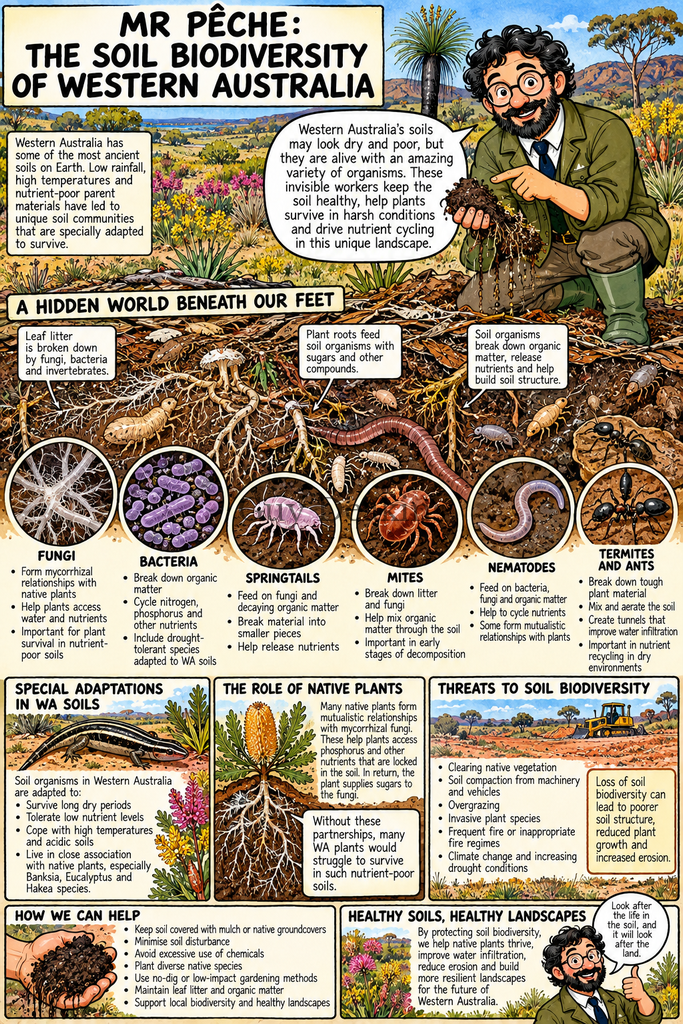
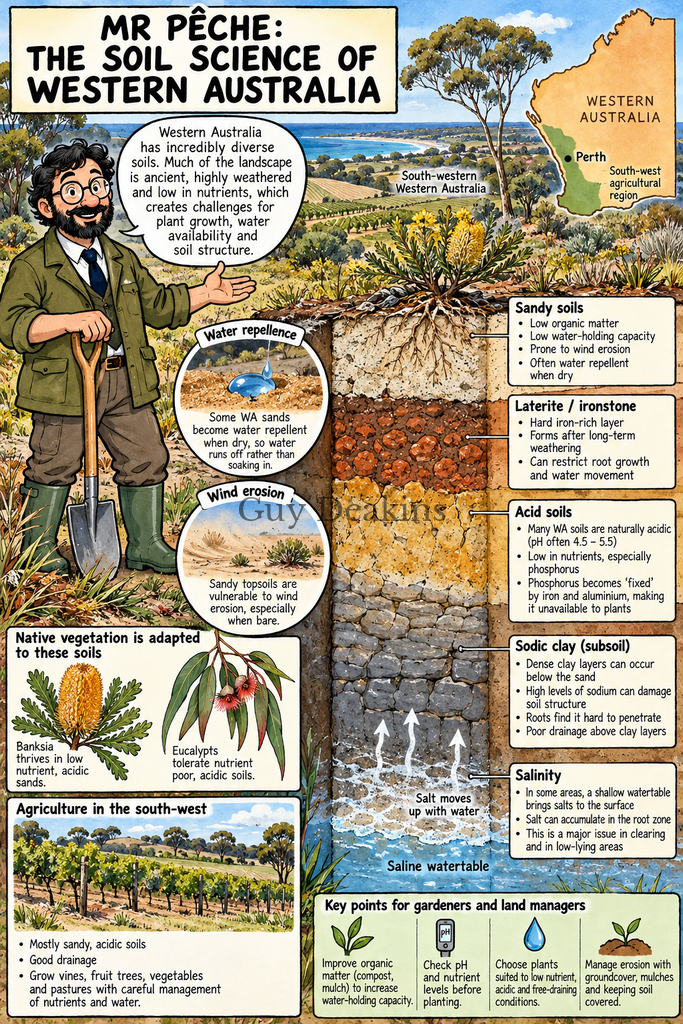
Large areas of Western Australia have sandy, nutrient-poor soils. Sandy soil drains quickly and often holds relatively little plant-available water.
Gardeners can improve soil by:
- Incorporating suitable, mature compost where appropriate.
- Applying organic mulches to reduce evaporation.
- Maintaining soil cover to protect soil organisms.
- Avoiding unnecessary cultivation that damages soil structure.
- Choosing plants adapted to local soil conditions.

However, not every soil needs the same treatment. Some Western Australian soils are clay-rich, saline or affected by other chemical constraints. Soil testing can help identify pH, salinity and nutrient problems before fertilisers or soil amendments are applied.
4. Choosing suitable plants
Native Australian plants are often valuable choices because many are adapted to local rainfall patterns and soils. However, native plants are not automatically drought-tolerant, and species from tropical northern Australia may not suit a dry southern garden.
Examples of plants used in suitable Western Australian gardens include:
| Plant | Gardening value |
|---|---|
| Banksia species | Distinctive flowers; many support wildlife |
| Grevillea species | Flowering shrubs that can attract birds and pollinators |
| Kangaroo paw (Anigozanthos species) | Striking flowers suited to appropriate conditions |
| Eucalyptus species | Trees that provide shade and habitat, where space permits |
| Westringia fruticosa | A hardy shrub suitable for many coastal and dry gardens |
Plant selection must consider mature size, drainage, exposure, frost, irrigation needs and local ecological suitability. Some Australian plants are sensitive to phosphorus-rich fertilisers, so fertiliser choice should follow species requirements.
5. Saving water

Water is a major consideration in Western Australian gardening. Efficient water management can reduce waste while helping plants establish healthy root systems.
Useful methods include:
- Installing drip irrigation to deliver water near plant roots.
- Watering deeply when required rather than applying frequent, shallow amounts.
- Mulching soil to reduce evaporation, while keeping mulch away from stems and trunks.
- Grouping plants with similar water requirements.
- Collecting rainwater where permitted and practical.
- Improving soil structure and organic matter where suitable.
Newly planted trees and shrubs still need regular establishment watering. A drought-tolerant plant is not necessarily drought-proof, particularly during its first summer.
6. Sustainable garden design
A sustainable Western Australian garden works with local environmental conditions rather than continually fighting them.
Design principles include:
- Using shade trees and sheltered spaces to reduce heat.
- Selecting plants appropriate to local rainfall and soil.
- Creating habitats for native birds, insects and other wildlife.
- Reducing unnecessary fertiliser and pesticide use.
- Using permeable surfaces where appropriate to help rainwater enter the soil.
- Avoiding invasive plants that could spread into natural bushland.
Western Australia contains exceptionally distinctive native flora. Gardeners have an important role in protecting local biodiversity by selecting appropriate plants and preventing garden escapes into surrounding habitats.

7. Practical activity: Plan a water-wise garden
Choose a small garden area and investigate its conditions.
- Record the amount of sunlight it receives.
- Examine the soil texture and drainage.
- Identify possible sources of shade and shelter.
- Select three plants suited to the conditions.
- Plan a suitable irrigation and mulching system.
- Explain how your design will conserve water and support biodiversity.
Knowledge check
- Why do many sandy soils need careful water management?
- What is the purpose of applying mulch?
- Why must native plants be selected according to local conditions?
- How does drip irrigation help reduce water waste?
- Give two ways a garden can support biodiversity.

Conclusion
Western Australian gardening demonstrates the importance of adapting horticultural practice to climate, soil and water availability. Careful plant selection, efficient irrigation, soil protection and biodiversity-conscious design can create attractive gardens that use resources responsibly.
Key Level 2 principle: Understand the site before choosing the plants. The best garden is designed for its actual conditions, not simply for appearance.
References
- Government of Western Australia, Department of Biodiversity, Conservation and Attractions. Information on Western Australian native plants, biodiversity and conservation.
- Government of Western Australia, Department of Water and Environmental Regulation. Information on water conservation and sustainable water use.
- Royal Horticultural Society (RHS). Guidance on soil management, mulching, irrigation and plant selection.